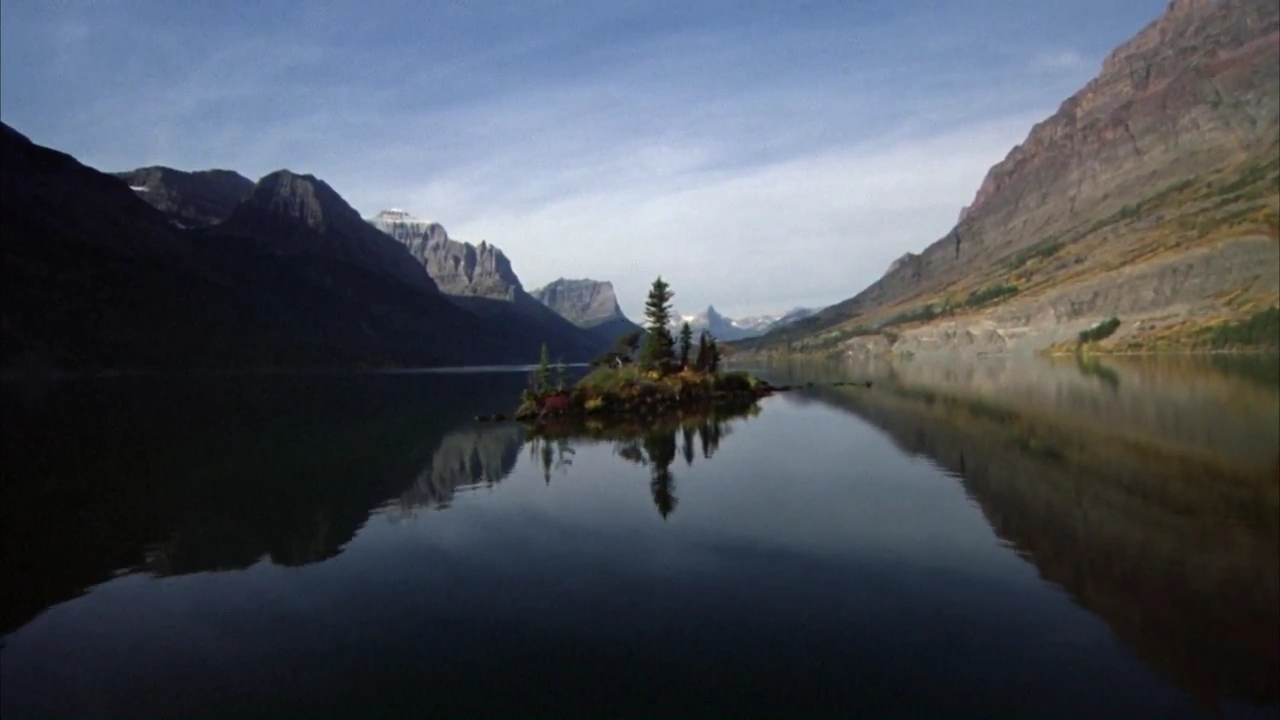
Dies Irae
The Credits · No.2
Film excerpts retain the surrounding dialogue, effects and layered music.
Christine Gengaro, Listening To Kubrick
In this image · No.2
Dies Irae, a Roman Catholic chant. was sourced by Wendy Carlos when Kubrick asked her to provide music that reminded her of “graves and death”
American History Narrative
Ghost Story Narrative
Dies Irae, a Roman Catholic chant. was sourced by Wendy Carlos when Kubrick asked her to provide music that reminded her of “graves and death”
American History Narrative
Ghost Story Narrative
Full Sound: Sound Reflection & Meaning
Christine Gengaro, Listening To Kubrick
Dies Irae, a Roman Catholic chant. was sourced by Wendy Carlos when Kubrick asked her to provide music that reminded her of “graves and death”
American History Narrative
Ghost Story Narrative
Wendy Carlos, Rocky Mountains
Dissonance, creates a forbidding feel
Using shrieks and voices, trills etc
American History Narrative
Ghost Story Narrative
No.—S: same sound No.48, No.50, No.54-No.58
Wendy Carlos, Shining Heartbeat, Pg 196
No.48, Halloran receive Shining message from Danny re: danger from The Overlook (this is layered towards the end with Penderecki’s The Awakening of Jacob)
No.50, Jack and Wendy talk while Danny sees visions
No.54-1169, Wendy paces planning to leave The Overlook through Danny redrum from the other room, through No.55-1185 as Jack dismantles radio, through No.58 as Halloran flies in a Continental.
In No.58, it is pounding loud.
According to Christine Gengaro, it is reflective of Halloran and Danny’s Shining communication.
No.—S: same soundNo.48, No.50, No.54-No.58
Wendy Carlos, Shining Heartbeat
thematic reflection, No.2, No.9- both as Dies Irae and the shrills, trills, human voices crying signifying ghosts, history/death, American History, Abuse
Meant to be jarring and unpleasant.
American History Narrative
Ghost Story Narrative
No.—S:
Grygory Ligeti, Lontano
No.12, as Danny plays darts in games room to see Grady Girls
No.16, as Halloran connects with Danny “How’d you like some ice cream, doc?”
No.33 as Wendy and Danny play in the snow.
From No.33 it continues on across No.37, as Wendy discovers the phones are disconnected. The music fades out and is replaced by wind as she enters Ullman’s office and approaches the radio.
A—S:
Bela Bartok, Music for Strings Percussion and Celesta
This is a Maze aspect/attribute,
creates a feeling of suspense
No.26- Wendy and Danny enter hedge maze, hedge maze map eclipses entrance
No.30- As Danny trikes over where Jack works
No.41, right as the scene starts, using a different portion of the song- the other two instances use the same portion, with the 2nd instance starting a little earlier.
——
Sound & Scene reflection: Penderecki
1.De Natura Sonoris #1
No.38, Danny trikes to Grady Girls / WW Hallway
No.66 (which is also layered with Polymorphia), Wendy discovers Jack’s sabotage of the snowcat
The use of this in these scenes creates the feeling of new information being received, but not seeing the whole picture.
Danny is confronted with The Grady Girls and is confused with what information he should be trusting. The viewer is confused.
For No.66, Stainforth and Kubrick layered De Natura Sonoris #1 with Polymorphia to accentuate Wendy’s rising panic.
2.De Natura Sonoris #2
No.45-No.46- Danny confronts Wendy and Jack in Co Lounge, Jack walks down Gold Room Hallway
No.89 Danny and Wendy connecting after Danny escapes from maze(which is layered with Kanon For Orchestra and Tape)
In No.45, we are witnessing how The Torrance’s act in a crises. In No.46, we are witnessing how Jack responds.
In No.89, we are relieved and finally centered in a solution.
For both #1 and #2, it is important to keep in mind that this is the discovery of new sounds. The music is sound exploration at its greatest- in that it uses instruments not usually played and sounds/pitches and techniques not usually employed.
It is meant to create a feeling of uncertainty, new information, unease, and tension.
No.6, Danny talks with Tony while brushing his teeth
No.45, Jack tells Wendy of his bad dream
No.48(layered with Shining / heartbeat cue)
The choice of music is ironic because Danny’s loss of consciousness and vision of something horrible and the biblical text behind the work is ‘being aware that God is there to protect you’.
This is the opposite of its intended purpose.
The occurrences for the music relate to Danny talking with Tony about not wanting to go to the hotel and why Tony was afraid, Jack’s “I had a horrible nightmare”, and Jack embracing the woman in Room 237 and transitioning to the reality of the decaying woman.
No.63-64, (layered with Utrenja II and Kanon Paschy), Jack and Wendy argue in Co Lounge
No.65, Wendy secures Jack within the pantry
No.66 (layered with De Sonoris #1), Wendy realizes Jack has sabotaged snow cat
5.Kanon For Orchestra and Tape
No.72 Jack axing through the door (layered with Utrenja II and Kanon Paschy)
No.81 Jack chases Danny into maze
No.84 Danny running from Jack in maze (layered with Utrenja II with Ewangelica and Utrenja II with Kanon Paschy)
Utrenja II: Ewangelica
No.44 Utrenja II: Ewangelica
No.48 Utrenja II: Ewangelica
No.72 (Jack axes through apartment door) / Wendy sees ‘REDRUM’
No.80 Wendy sees bear blow job
No.83 Wendy sees dead halloran, Wendy gets shocked from “great party isn’t it”
No.84 Jack yells out “I’m right behind you”
Utrenja II: Ewangelica
The ‘sting’ of percussion that hits hard, is done so to accentuate awareness and the reality of the situation, and the immediate danger they are all in.
Utrenja II: Kanon Paschy
No.64 - Wendy hits jack with bat and he falls down stairs
No.72 Jack breaks down the bathroom door with axe
No.87-No.88 Wendy witnessing the blood elevator, Jack lumbers around hedge maze, while Danny waits it out
—-
Sound and Scene reflection: Big Band Music- played in No.51, No.53, No.91
All of the big band music heard is from the 1930’s, which is a full decade past the 1921 reference made No.91
This supports the false nostalgia/time reference of not always remembering things as they occurred, but amalgamating them from a comfortable place.
It is also interesting to note that all of the bandleaders shown here are British, which could support the imperial overtone of the messaging.
1. Midnight, The Stars & You
The theme of the song is a magical night spent dancing under the stars, in which the singer promises to remember for the rest of his life.
This creates a message of history repeating itself, and when it is replaced in No.91, that is the message that is clearly conveyed.
This is also another example of how your memory of a situation or time was not how it really was.
This is primarily important because of the name, and as it’s playing, Jack is trying to prove that who he is talking to is Delbert Grady- who he read about in the papers.No.22
No.53In reality, he heard about Charles Grady from his interview for the job.
The facts are wrong, Grady doesn’t even remember being the caretaker, and it goes to show the slippery nature of time and facts in the face of delusion.
3. Home
This music is important on 3 levels.
As it plays, Grady is informing Jack of his ‘home situation’: Danny is willful, bringing in outside influence, Wendy interferes, and Grady’s previous actions leading to his advice with how Jack should handle it.
On a deeper level, it shows who within Jack’s “home” is playing which role. Grady is serving as a violent hate-filled side, with Jack serving as Grady’s #2 man.
On an overarching American History level- Grady’s british accent (which speaks to British Imperialism guiding the way to American imperialism/manifest destiny, the reference to Halloran’s stature as “Ni**er cook” to appease the rage of the mediocre blue collar white man, men sacrificing their children’s generation for their own gain and notoriety, and the justification of all of it is 100% American.
—
The use of cartoon music was purposefully injected by Stainforth.
No.4, and No.62- and Stainforth was particularly proud of his choreographic the Road Runner music with Wendy picking up the bat and leaving the apartment.