This sound’s written analysis and scene connections are available. An identified audio excerpt has not been added.
This music is important on 3 levels.
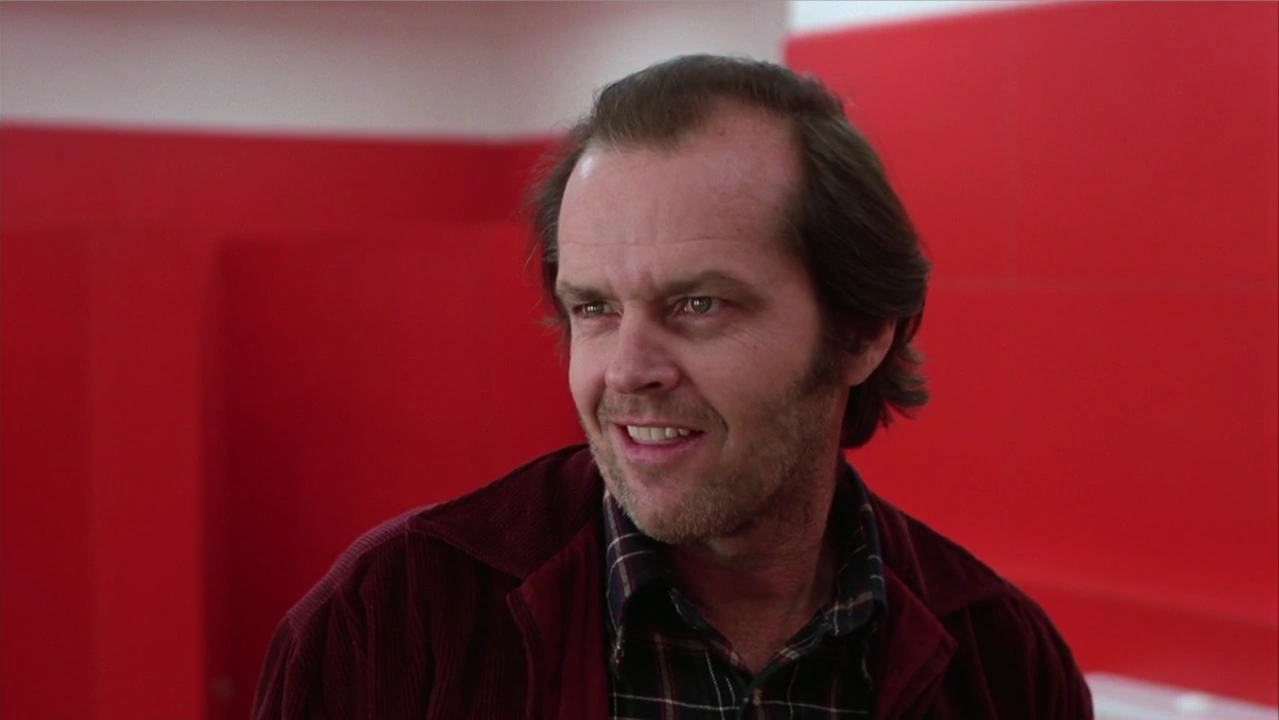
As it plays, Grady is informing Jack of his ‘home situation’: Danny is willful, bringing in outside influence, Wendy interferes, and Grady’s previous actions leading to his advice with how Jack should handle it.
On a deeper level, it shows who within Jack’s “home” is playing which role. Grady is serving as a violent hate-filled side, with Jack serving as Grady’s #2 man.
On an overarching American History level- Grady’s british accent (which speaks to British Imperialism guiding the way to American imperialism/manifest destiny, the reference to Halloran’s stature as “Ni**er cook” to appease the rage of the mediocre blue collar white man, men sacrificing their children’s generation for their own gain and notoriety, and the justification of all of it is 100% American.
All of the big band music heard is from the 1930’s, which is a full decade past the 1921 reference made No.91
This supports the false nostalgia/time reference of not always remembering things as they occurred, but amalgamating them from a comfortable place.
It is also interesting to note that all of the bandleaders shown here are British, which could support the imperial overtone of the messaging.
In this image · No.53
Sound in No.53
Recordings, Period and False Nostalgia
I identify the heard big-band recordings with the 1930s, after the 1921 date in the final photograph. I read the party as an assembled nostalgic past and the British musical associations as another layer of imperial influence.
Midnight, the Stars and You
The song frames an unforgettable night and returns with No.91’s photograph. The repetition connects nostalgic memory with history repeating itself.
Winter and the July Fourth Photograph
The scene occurs during the Torrances’ winter stay, while No.91 names a July 4, 1921 ball. I estimate the present action around December from the chapter sequence. The mismatch makes the American holiday and historical framing significant rather than establishing that both scenes depict one literal event.
The Return and the Final Photograph
The return foreshadows No.91. “Midnight, the Stars and You” links the party with the final photograph and the reading of history repeating itself.
References: No.91.
It’s All Forgotten Now
The song plays as Jack tries to identify Grady and confront him with his actions. Its title punctuates Grady’s claim that he remembers none of it.
Forgetting, Recognition and Conflicting Facts
Jack insists he recognizes Grady while Grady disclaims memory. Charles, Delbert, the newspaper, and the earlier interview make certainty unstable.
The song accompanies the account of Jack’s home situation.
The Family
Danny is named as willful, Wendy as interfering, and Grady’s family as an example of how Jack should respond.
The Internal Household
Grady becomes the violent, hate-filled authority, with Jack increasingly subordinate to him.
American History
I connect British influence, racial degradation, male entitlement, and sacrificing a younger generation with the private household being discussed.
Full Sound: Home
This music is important on 3 levels.
As it plays, Grady is informing Jack of his ‘home situation’: Danny is willful, bringing in outside influence, Wendy interferes, and Grady’s previous actions leading to his advice with how Jack should handle it.
On a deeper level, it shows who within Jack’s “home” is playing which role. Grady is serving as a violent hate-filled side, with Jack serving as Grady’s #2 man.
On an overarching American History level- Grady’s british accent (which speaks to British Imperialism guiding the way to American imperialism/manifest destiny, the reference to Halloran’s stature as “Ni**er cook” to appease the rage of the mediocre blue collar white man, men sacrificing their children’s generation for their own gain and notoriety, and the justification of all of it is 100% American.
All of the big band music heard is from the 1930’s, which is a full decade past the 1921 reference made No.91
This supports the false nostalgia/time reference of not always remembering things as they occurred, but amalgamating them from a comfortable place.
It is also interesting to note that all of the bandleaders shown here are British, which could support the imperial overtone of the messaging.