This sound’s written analysis and scene connections are available. An identified audio excerpt has not been added.
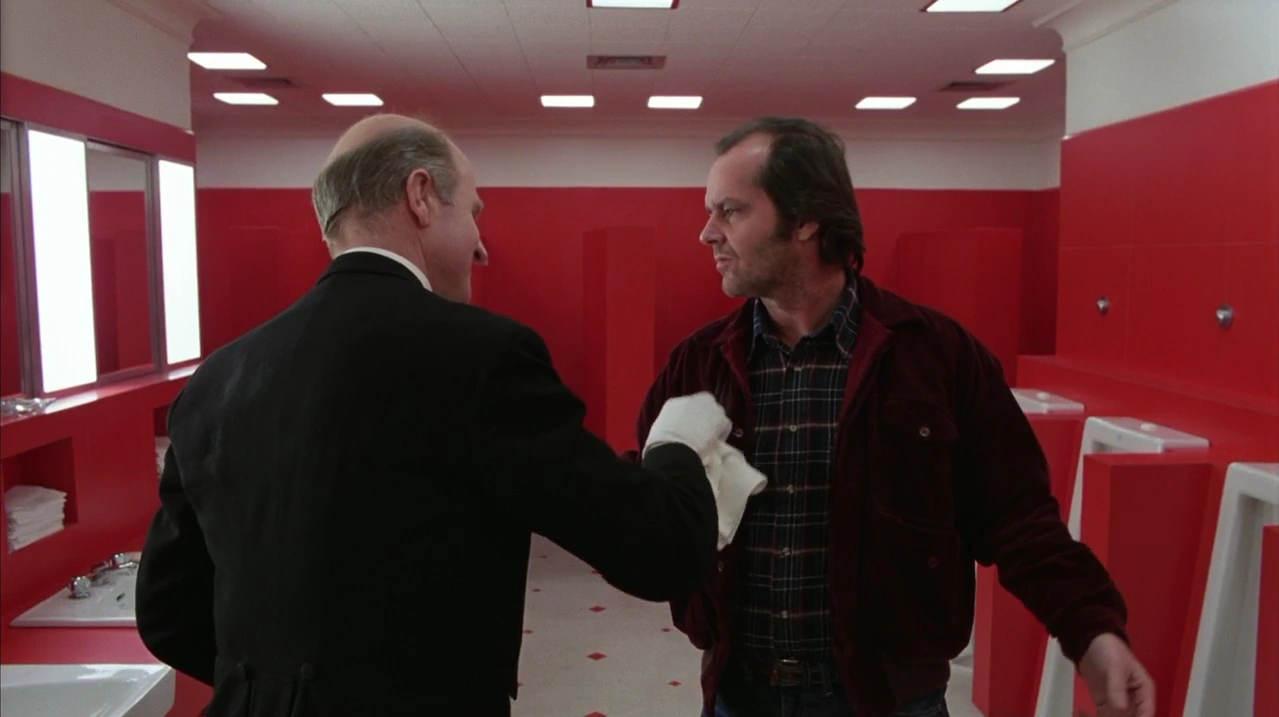
This is primarily important because of the name, and as it’s playing, Jack is trying to prove that who he is talking to is Delbert Grady- who he read about in the papers. In No.53, in reality, he heard about Charles Grady from his interview for the job.
The facts are wrong, Grady doesn’t even remember being the caretaker, and it goes to show the slippery nature of time and facts in the face of delusion.
All of the big band music heard is from the 1930’s, which is a full decade past the 1921 reference made No.91
This supports the false nostalgia/time reference of not always remembering things as they occurred, but amalgamating them from a comfortable place.
It is also interesting to note that all of the bandleaders shown here are British, which could support the imperial overtone of the messaging.
In this image · No.53
This is primarily important because of the name, and as it’s playing, Jack is trying to prove that who he is talking to is Delbert Grady- who he read about in the papers. In No.53, in reality, he heard about Charles Grady from his interview for the job.
The facts are wrong, Grady doesn’t even remember being the caretaker, and it goes to show the slippery nature of time and facts in the face of delusion.
Full Sound: It’s All Forgotten Now
This is primarily important because of the name, and as it’s playing, Jack is trying to prove that who he is talking to is Delbert Grady- who he read about in the papers. In No.53, in reality, he heard about Charles Grady from his interview for the job.
The facts are wrong, Grady doesn’t even remember being the caretaker, and it goes to show the slippery nature of time and facts in the face of delusion.
All of the big band music heard is from the 1930’s, which is a full decade past the 1921 reference made No.91
This supports the false nostalgia/time reference of not always remembering things as they occurred, but amalgamating them from a comfortable place.
It is also interesting to note that all of the bandleaders shown here are British, which could support the imperial overtone of the messaging.