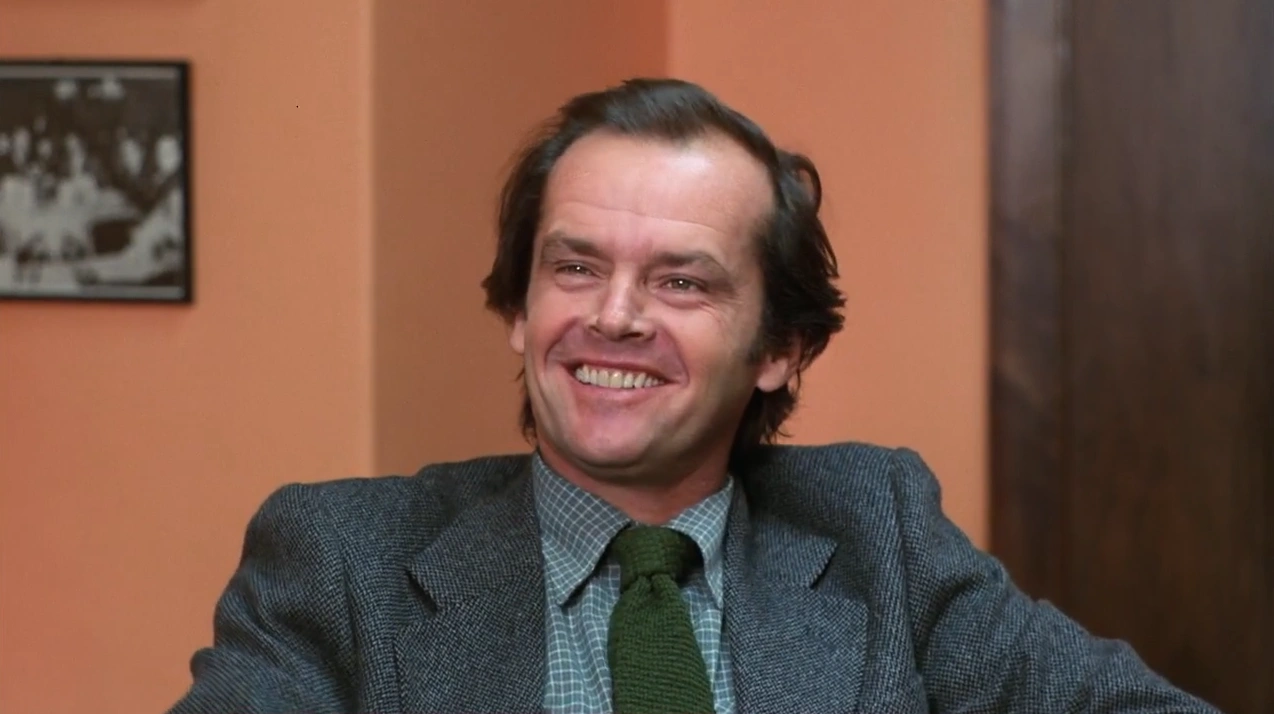
Due to peoples’ nature to treat a person based on first appearances, meeting Jack when he’s cheesing it to impress is important.
There’s also something to be said about abusers not showing their abusive nature to anyone outside of those they’re abusing. It insulates the abused against getting outside help and protects the reputation of the abuser. The viewer isn’t going to see Jack as abusive until it’s already been established that he too is a “perfectly normal individual”.
True, Jack would be on his best behavior to get a job, but he still declares himself to be a writer directly in front of his employer. It’s not “best behavior” behavior.
The viewer doesn’t know it yet, but he’s also shown his true nature: he lies about Wendy’s character and doesn’t consider his family’s feelings at all while taking this job (a job we’ll see Wendy doing across the film).
In this image · No.5
Abuse
Abusers having a public face and a private face.
Relating to Jack’s demeanor and the parallels of an abuser, how Jack is during The Interview (and also not around his family) is the first impression the viewer gets of Jack. It can be easy to slough off his rage and violence as results of his living conditions, but Kubrick is using a tactic that abusers use to safe-proof their behavior. Abusers don’t show themselves to be abusive in every context— only in ones where the power dynamic is fully skewed in their favor (aka when they’re alone with their victim).