Awareness and maybe also the lack of it, is shown clearly across the film.
Jack is made aware of Danny’s “great power” and attempts to get help, Wendy chooses not to see -- like an ostrich in the sand— and Danny is shown being so aware of it all, he is either placed within the same setting or linked through sound, further connecting him.
It’s a theme linked with choices, fatalism, denial, patterns, and cycles.
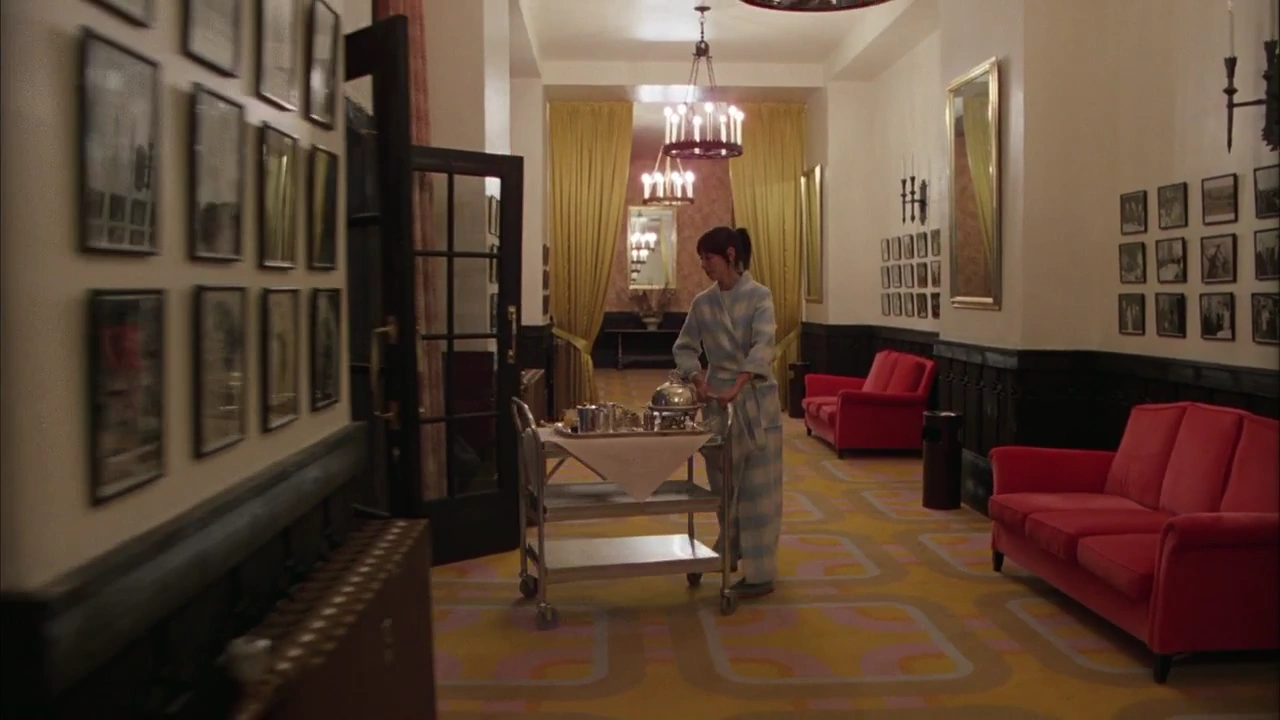
In this image · No.22
Mirrors break up the blocks of black and white photos, and the mirrors themselves are doubled. They speak to showing reality and, for Wendy, needing to see while refusing to see. See: Denial.
The mirrors connect Wendy’s need to see with the moments when she overlooks, explains away, or begins to recognize the danger around her. In No.7 she describes Tony as Danny’s imaginary friend; No.7 concerns Jack’s violence, alcoholism, and their effects on the family. No.16 has Halloran lying directly to her, and No.24 gives her two Jacks. The news in No.29 speaks about violent men. The later images continue this movement toward recognition.
No.4; No.7; No.7; No.16; No.24; No.29; No.31; No.31; No.50; No.50; No.54; No.62; No.64; No.65; No.66; No.71; No.71; No.71
In No.64, Jack says, “You’ve had your whole fucking life to think things over. What’s a few minutes more going to do you now?” See: Wendy’s Trail of Awareness.