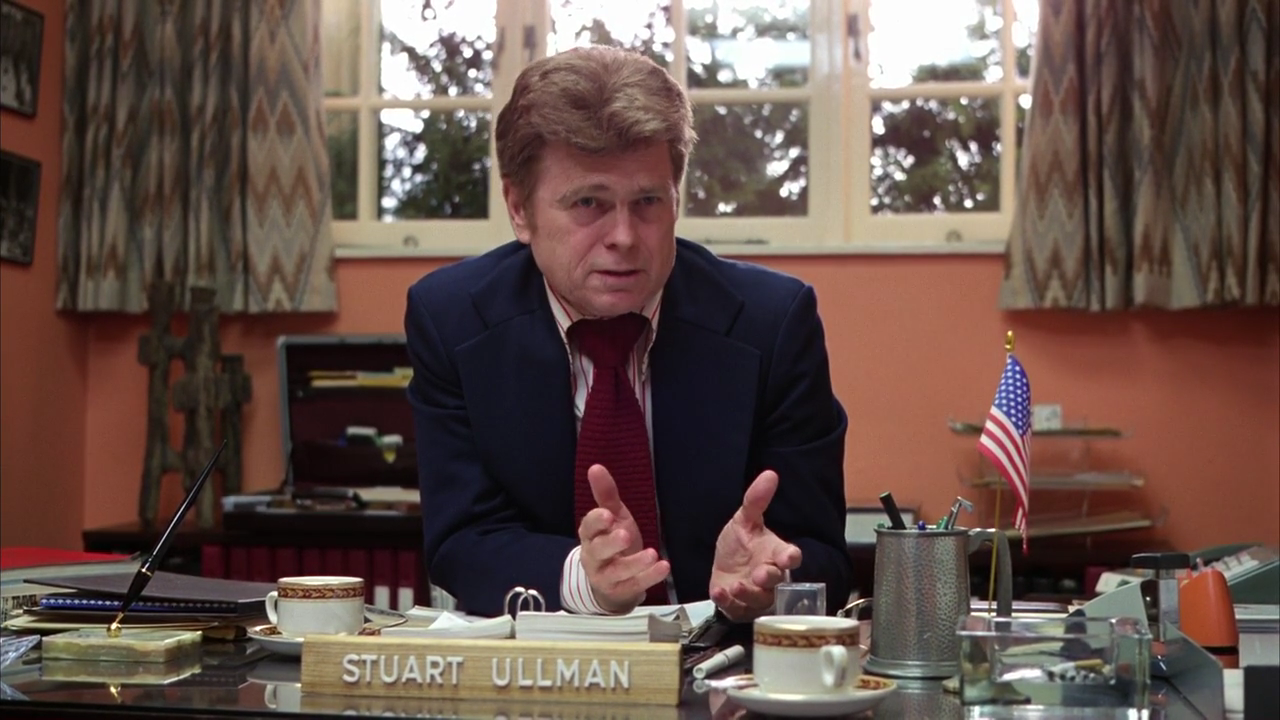
Sometimes with an artist, the eye just does what feels good, and Kubrick is absolutely an artist. He’s also a designer.
Getting his start as a photographer is going to allow Kubrick some leeway in the understanding that sometimes the shot “just looks good” and the details aren’t as important as you’d think (I know, even with a Kubrick film).
One of these things is his use of one point perspective. I believe it is this ‘favorite’ framing of his that allows the film to be viewed forwards and backwards with things lining up. They line up because compositionally he’s got a framing that he uses to anchor almost every shot.
Sometimes with an artist, the eye just does what feels good, and Kubrick is absolutely an artist. He’s also a designer.
Getting his start as a photographer is going to allow Kubrick some leeway in the understanding that sometimes the shot “just looks good” and the details aren’t as important as you’d think (I know, even with a Kubrick film). Through my research, I found that while certain details are life and death, others are treated as ancillary.
I wanted to include an option that says “this shot might just have looked nice”, however there were enough semiotic easter eggs for me to seek out the meaning of the details anyway.
shot repetition (Kubrick’s natural aesthetic):
In this image · No.5
{in a macro/micro way; No.5 is still set up in this framing}