Linked to Patterns of Behavior, Cycles also deal with deep-seated repetitions (shown through Scene Repetitions), as well as their conceptual counterparts (like in The American History aspect, the Cycle Theory).
It’s things that repeat. It’s having Ullman talk about the Tragedy of 1970 and the events of The Torrance’s playing out much like what we hear.
It’s No.7 and Wendy’s confession around Danny’s injury and No.45’s action taking place that trigger that wound.
It’s No.47 and No.50 creating an additional layer in frustration and isolation.
It’s Wendy walking a food cart to Jack to serve him breakfast in bed and it’s Halloran walking the same path for Jack to kill.
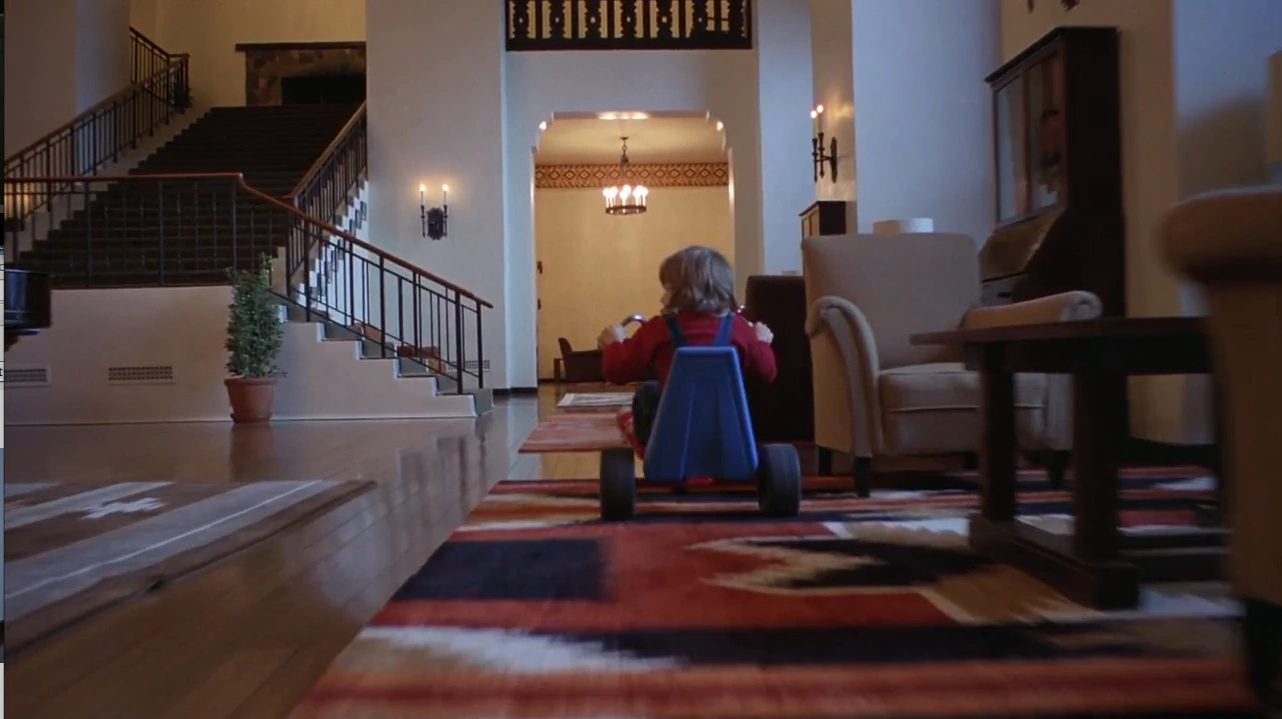
It’s Danny’s triking sequences, it’s the sheets over the couches in No.91 serving as a visual “reset”.
It’s how Kubrick splices together all of the characters running, Wendy within the hotel and Jack and Danny within the maze to convey the two experiences.
In this image · No.23
Color and the Repeating Cycle
As Danny trikes along, the colors in the various rugs go from neutrals and browns to orange and red, to red and black, and back to neutral. Conceptually this relates to the pacing of the film: presented as normal and neutral, escalating in emotional intensity, reaching a heated violent climax, and then resetting back to neutrality.