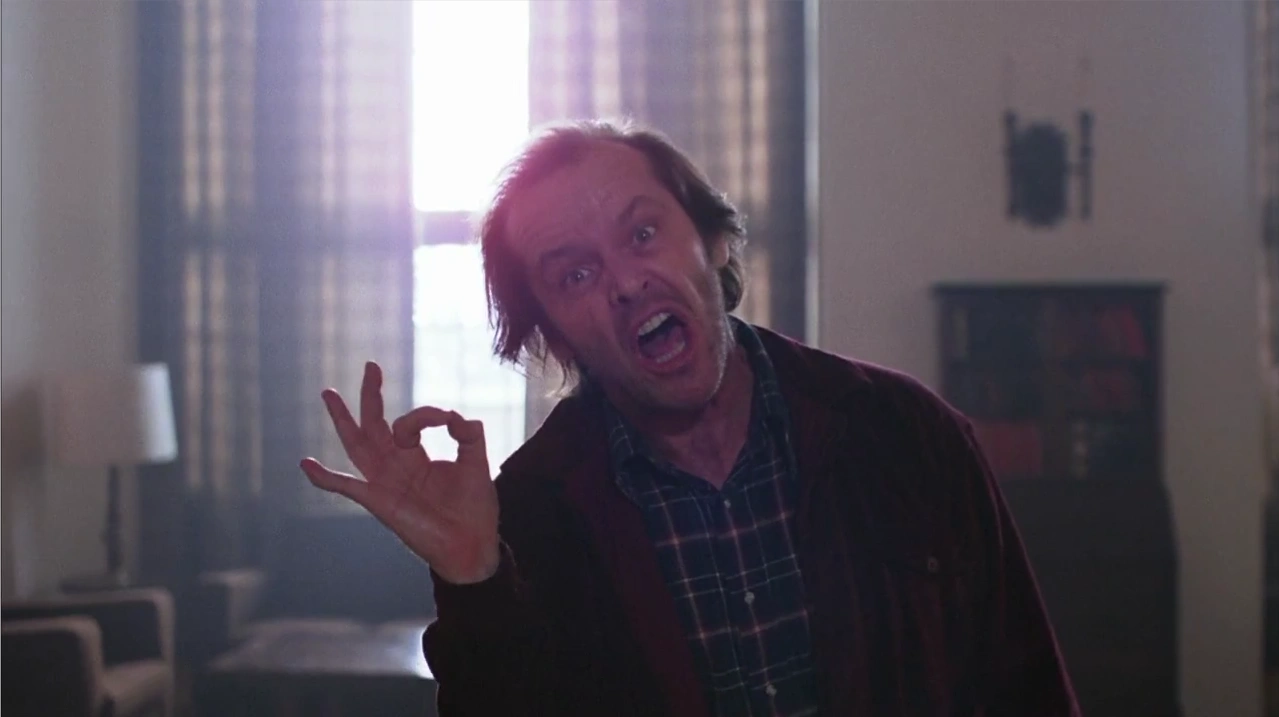
It’s difficult to write about behavior that was accepted at the time, but now recognized as harmful. Toxic Masculinity is one of these, and it’s exactly what Jack embodies so clearly within the film.
Toxic masculinity is represented by qualities such as violence, dominance, emotional illiteracy, sexual entitlement, and hostility to femininity.
Jack’s toxic masculinity shows itself in a banal way— throwing his tennis ball down the hallway to stare over the maze model, and it transitions into being threatened by Danny, attacking Wendy for his own lack of career options, excusing his violent tendencies, openly berating Wendy for breaking his concentration, manipulating her for his own benefit, and the list goes on.
Because Jack’s behavior is so easily brushed off as a result of cabin fever or spiritual influence, I would argue that that very reflex is indicative of toxic masculinity.
On a conceptual level, it is easy to see how Toxic Masculinity is the personal version of Colonialism/Imperialism’s societal version.
In this image · No.64
Professional Status and Masculine Worth
The American History / Culture reading connects Jack’s professional identity with a model of masculine worth organized around career and authority. “I’m a writer” in No.5 places that identity above teaching. His stalled work in No.24 and No.25, the manuscript in No.63, and his anger about driveways and car washes in No.50 make status a source of resentment. Wendy’s world is organized around care while his claims of duty place him in a separate world of commerce and control.
“Have You Ever Thought About My Responsibilities?”
Jack speaks of responsibility while excluding the safety of his wife and son from it. Wendy is doing the practical maintenance in No.45, wearing the shirt associated with him in No.3 and No.5. His stated priorities are work, status, and ego; Grady recasts his family responsibility as control. The emotional maze requires Wendy to answer claims detached from what she has actually been doing.
The American History / Culture reading connects Jack’s professional identity with a model of masculine worth organized around career and authority. “I’m a writer” in No.5 places that identity above teaching. His stalled work in No.24 and No.25, the manuscript in No.63, and his anger about driveways and car washes in No.50 make status a source of resentment. Wendy’s world is organized around care while his claims of duty place him in a separate world of commerce and control.