The easiest way to explain this is to think of it as “a thing Kubrick does to convey what he wants”.
Sometimes it can be the way he frames something like in No.64 and how he has Jack coming out of the darkness in one side of the frame as the scene begins and has Wendy eclipsing the other side of the frame as it ends.
Or it can be how he uses music to “crescendo” in fulness after 3 iterations of using it clipped.
It’s his way of message making using imagery, composition, sound, dialogue and the interweaving of these things creating deeper messages.
I’ve organized them into The Maze (the way he uses time and information to mess with your understanding and sense of things), American History (how he uses references, symbols, euphemism to communicate the subtext of Americanism as a macrocosm), and Domestic Abuse (it is overt and needs no breakdown). I call Ghost Story and Cabin Fever false narratives based on the relative amount of semiotic evidence supporting them. There is evidence for a ghost story, but I find substantially more evidence for the film as a larger metaphor of American History / Culture. Cabin Fever also has evidence, but far fewer examples than Domestic Abuse. Both remain included because their evidence is present. The distinction concerns their explanatory weight in my reading, rather than an assertion that they have no evidence or that supernatural events cannot occur.
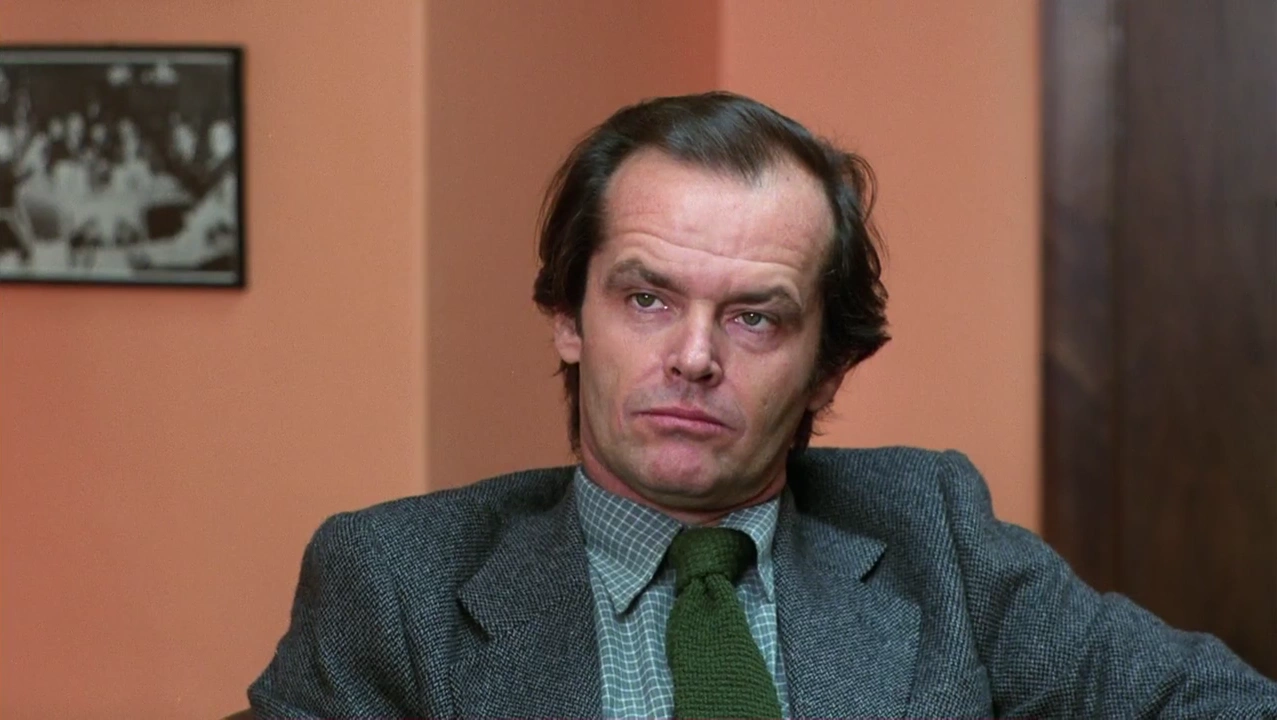
In this image · No.5
Seating Jack below a black and white photo foreshadows the end. Dressing Ullman as Uncle Sam (when he’s described clearly in the novel), seating him in front of an eagle, saying things like “Hard to believe it happened here” shows the viewer the way messages are going to be constructed in this film.