Characters: Danny
Danny is the young son, maybe around 5-7 years old. It’s strange to me how stoic he is (and how wonderful it is to see Danny Lloyd smiling happily in BTS shots).
There are a lot of “normal American childhood” references in Danny’s bedroom and clothing— what Americans at the time would immediately recognize- Mickey Mouse, Bugs Bunny, Peanuts (Snoopy & Woodstock).
His main companion is his mother and a “little boy who lives in his mouth” who tells him things, Tony.
In the “conceptual way to view the narrative”, Jack represents ideals like patriarchy and colonialism. Danny (along with Wendy and Halloran) represents the reality of experiencing those ideals.
In both American Culture and Domestic Abuse, Danny simply represents “children” or “future generations”. It’s not difficult to imagine children dying carelessly because greedy mediocre men want to play, or the choices men in power make today coming to haunt future generations tomorrow. Gun violence is the number one killer of children in America today, children now are finding it hard to imagine a life when the climate crisis looms larger every single day. While Kubrick would have no way of knowing these things, I’m sure he was well aware of the popular (yet painful) adage: “The only thing that we learn from history is that we learn nothing from history.”
Thematically, Danny is connected with bears, birds— prey animals. There are numerous portraits (really the same 3) repeatedly shown of Native American children painted through a Western lens. Couple this with The Grady Girls and Danny is conceptually connected with “those who got in the way”.
Styling, Clothing & Colors
Danny wears a lot of red, white, and blue. There are asignifiers of “normal American childhood” in the Bugs Bunny shirts and the Mickey Mouse sweaters—and it’s important that Danny’s sweaters are handmade (Kubrick hired a woman to hand knit them).
His outfit is the same color palette of the slain Grady Girls (right down to the silver in the axe blade and his handlebars on his tricycle), another outfit reflects the cans of ham in The Pantry, and Kubrick intentionally alters the color of Danny’s bedroom to “bathe” him in the same green of Room 237’s bathroom (No.48).
Another instance of intentional coloring: The blackness of the sideboard/oven thing that Danny hides in will turn his red and green sweater into a dingy red, white, and blue.
The Interview:
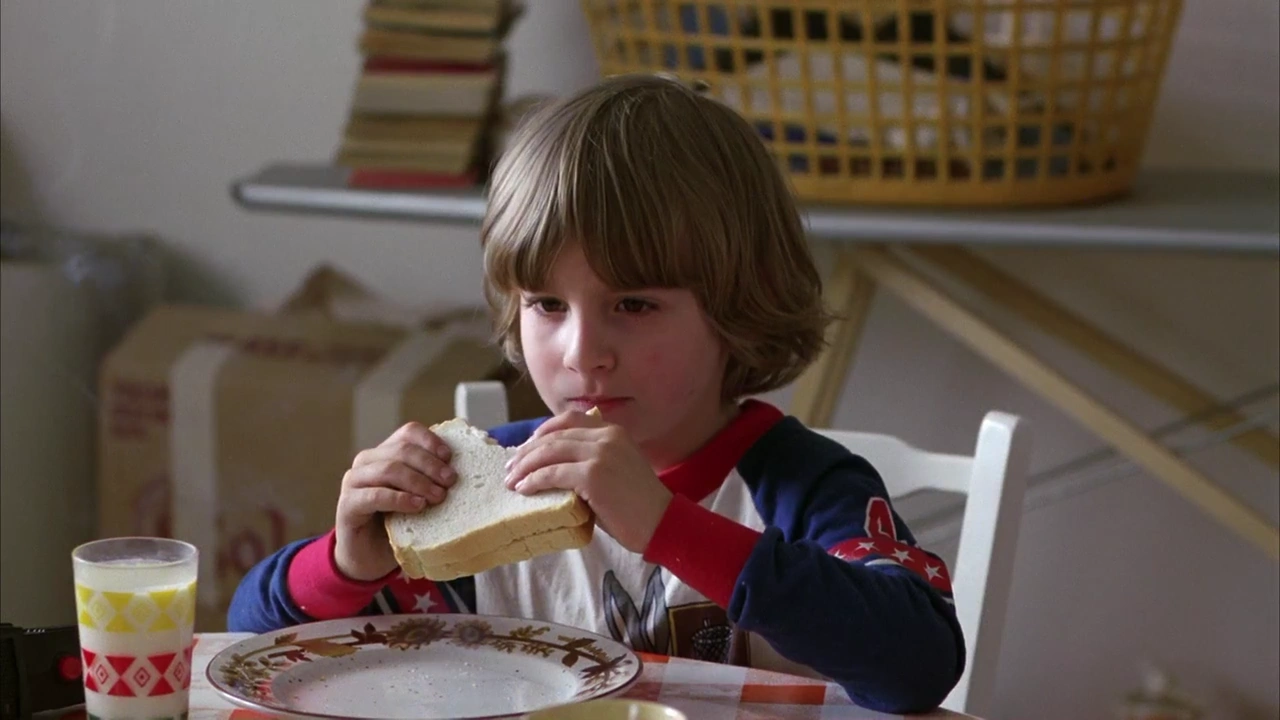
Danny wears a long sleeve shirt with a red collar, blue sleeves with red starred bands, and bugs bunny playing basketball on the front. If it could sing Yankee Doodle Dandy, I think it would.
Closing Day:
Danny’s navy blue jacket with a red stripe will reflect Halloran’s jacket. In No.19 they’re even reflected in their body positioning.
Danny’s outfit reflects the Mickey Mouse sweater/collar shirt combo he wears No.41.
A Month Later:
Danny’s outfit is shown entirely from the back- the blue of the trike, the bright red sweatshirt, and a white and blue plaid collar. Red, white, and blue.
In No.26, he wears a deep red plaid jacket, bright red gloves, and olive green pants. This dark red/olive green color combination is reflected in the canned hams in the Pantry and his sweater in 4PM.
Tuesday:
Danny’s outfit is the same as A Month Later. Shown entirely from the back: the blue of the trike, the bright red sweatshirt, and a white and blue plaid collar.
Thursday:
Danny wears vibrant red and blue, the entire scene’s color composition is red, white, and blue.
Saturday:
Danny wears a vibrant red sweatshirt over a light blue sweater— over a red, white and blue checked collared shirt.
His color palette reflects the color palette of the slain Grady girls.
Monday:
Danny’s sweater has Mickey Mouse kicking a football, paired with a red plaid collared shirt.
In terms of color, it’s the same tones of blues that he wears during the Closing Day sequences.
It also reflects what Jack is wearing: the same tones of blue.
Wednesday
In No.44, the tricycle is removed, but Kubrick has Danny wear the same color blue in a sweater.
No, I do not think the fact that it’s an Apollo 11 sweater means that it’s Kubrick “admitting” to faking the moon landing.
I think it’s a signifier of assimilation into American culture. It’d be a significant event for the time, and it’s clearly hand made.
Danny also wears a brown plaid collared shirt—that happens to reflect the brown plaid chair that’s right next to him in the hallway.
By No.48. Danny is shown wearing bright red pajamas and Kubrick has saturated the shot in green light. Compare to No.13, or even No.54 when it’s not green at all.
In No.50, Danny’s sheets and pillows are green, but again, but by No.54, it’s back to yellow (which is ‘normal’).
8AM
Danny’s still wearing the same vibrant red pajamas, but this time he’s wearing a dark brown robe.
4PM
Danny wears a red and green sweater over the blue (grey?) plaid collared shirt worn during A Month Later & Tuesday’s scenes. It reflects the cans of ham in The Pantry, matches The Green hallway, and will become red, white, and blue due to Kubrick’s intentional play with lighting.
Is the son of Jack and Wendy, and can be assumed to be 5-6 years old.
He’s shown to be quiet, sullen. He’s also shown to not be in school, to have either an imaginary friend or a device from within himself that serves his as company (when he’s not serving as his mother’s company).
In this image · No.4
Danny in Boulder
Danny’s Bugs Bunny shirt combines red, white and blue with a familiar childhood character. These ordinary childhood references recur throughout the study.
Full Character: Danny
Characters: Danny
Danny is the young son, maybe around 5-7 years old. It’s strange to me how stoic he is (and how wonderful it is to see Danny Lloyd smiling happily in BTS shots).
There are a lot of “normal American childhood” references in Danny’s bedroom and clothing— what Americans at the time would immediately recognize- Mickey Mouse, Bugs Bunny, Peanuts (Snoopy & Woodstock).
His main companion is his mother and a “little boy who lives in his mouth” who tells him things, Tony.
In the “conceptual way to view the narrative”, Jack represents ideals like patriarchy and colonialism. Danny (along with Wendy and Halloran) represents the reality of experiencing those ideals.
In both American Culture and Domestic Abuse, Danny simply represents “children” or “future generations”. It’s not difficult to imagine children dying carelessly because greedy mediocre men want to play, or the choices men in power make today coming to haunt future generations tomorrow. Gun violence is the number one killer of children in America today, children now are finding it hard to imagine a life when the climate crisis looms larger every single day. While Kubrick would have no way of knowing these things, I’m sure he was well aware of the popular (yet painful) adage: “The only thing that we learn from history is that we learn nothing from history.”
Thematically, Danny is connected with bears, birds— prey animals. There are numerous portraits (really the same 3) repeatedly shown of Native American children painted through a Western lens. Couple this with The Grady Girls and Danny is conceptually connected with “those who got in the way”.
Styling, Clothing & Colors
Danny wears a lot of red, white, and blue. There are asignifiers of “normal American childhood” in the Bugs Bunny shirts and the Mickey Mouse sweaters—and it’s important that Danny’s sweaters are handmade (Kubrick hired a woman to hand knit them).
His outfit is the same color palette of the slain Grady Girls (right down to the silver in the axe blade and his handlebars on his tricycle), another outfit reflects the cans of ham in The Pantry, and Kubrick intentionally alters the color of Danny’s bedroom to “bathe” him in the same green of Room 237’s bathroom (No.48).
Another instance of intentional coloring: The blackness of the sideboard/oven thing that Danny hides in will turn his red and green sweater into a dingy red, white, and blue.
The Interview:
Danny wears a long sleeve shirt with a red collar, blue sleeves with red starred bands, and bugs bunny playing basketball on the front. If it could sing Yankee Doodle Dandy, I think it would.
Closing Day:
Danny’s navy blue jacket with a red stripe will reflect Halloran’s jacket. In No.19 they’re even reflected in their body positioning.
Danny’s outfit reflects the Mickey Mouse sweater/collar shirt combo he wears No.41.
A Month Later:
Danny’s outfit is shown entirely from the back- the blue of the trike, the bright red sweatshirt, and a white and blue plaid collar. Red, white, and blue.
In No.26, he wears a deep red plaid jacket, bright red gloves, and olive green pants. This dark red/olive green color combination is reflected in the canned hams in the Pantry and his sweater in 4PM.
Tuesday:
Danny’s outfit is the same as A Month Later. Shown entirely from the back: the blue of the trike, the bright red sweatshirt, and a white and blue plaid collar.
Thursday:
Danny wears vibrant red and blue, the entire scene’s color composition is red, white, and blue.
Saturday:
Danny wears a vibrant red sweatshirt over a light blue sweater— over a red, white and blue checked collared shirt.
His color palette reflects the color palette of the slain Grady girls.
Monday:
Danny’s sweater has Mickey Mouse kicking a football, paired with a red plaid collared shirt.
In terms of color, it’s the same tones of blues that he wears during the Closing Day sequences.
It also reflects what Jack is wearing: the same tones of blue.
Wednesday
In No.44, the tricycle is removed, but Kubrick has Danny wear the same color blue in a sweater.
No, I do not think the fact that it’s an Apollo 11 sweater means that it’s Kubrick “admitting” to faking the moon landing.
I think it’s a signifier of assimilation into American culture. It’d be a significant event for the time, and it’s clearly hand made.
Danny also wears a brown plaid collared shirt—that happens to reflect the brown plaid chair that’s right next to him in the hallway.
By No.48. Danny is shown wearing bright red pajamas and Kubrick has saturated the shot in green light. Compare to No.13, or even No.54 when it’s not green at all.
In No.50, Danny’s sheets and pillows are green, but again, but by No.54, it’s back to yellow (which is ‘normal’).
8AM
Danny’s still wearing the same vibrant red pajamas, but this time he’s wearing a dark brown robe.
4PM
Danny wears a red and green sweater over the blue (grey?) plaid collared shirt worn during A Month Later & Tuesday’s scenes. It reflects the cans of ham in The Pantry, matches The Green hallway, and will become red, white, and blue due to Kubrick’s intentional play with lighting.
Is the son of Jack and Wendy, and can be assumed to be 5-6 years old.
He’s shown to be quiet, sullen. He’s also shown to not be in school, to have either an imaginary friend or a device from within himself that serves his as company (when he’s not serving as his mother’s company).