Characters: Jack
Jack is the main character of the film, husband and father, writer, teacher, and caretaker of The Overlook.
He’s an American, based on his argument with Wendy about his job prospects— blue collar (or someone who does manual labor).
Knowing this, it’s strange that Jack goes from being a glorified janitor to being “the most important person” but that shift is important.
In American Culture, it’s often viewed as more important to be a man of ideas and creativity than a husband and father. An important man is a career man, not a man who rears the new generation of men.
In Domestic Abuse, Jack views Danny as a threat. Jack views Wendy as an obstacle to overcome in dealing with the threat.
The two narratives blend together when Jack kills Halloran. Halloran, a man who’s status is not only significantly higher than Jack’s (Halloran is Head Chef, has a separate living space, access to help and community, and means to pay for a next-night flight into a weather crisis), but who also has a sincere emotional connection with Danny.
The mediocre white man’s need to take down successful Black men is a tale as old as at least the 1600’s when the wealthy land owners knew to pit the poor Irish against the slaves. (History as A Weapon, People’s History of The United States).
The presentation and interactions with Grady: how Jack has “always been the caretaker” comes immediately after the fight with Wendy about how his job prospects would be “shoveling driveways” and “working at carwashes” if he left the hotel — jobs (and signifiers) of teenagers and young boys— not grown men. This, along with how Jack behaves like Wendy’s second son, is a comment on both American Culture and Domestic Abuse.
Kubrick may have ghosts interact with Jack, but if they’re always in front of a reflective surface, are we seeing ghosts or is Jack presenting versions of himself he’d rather see? And how is this different from how abusive people behave in real life?
Styling, Clothing & Colors
The early chapters has Jack in a lot of green- whether that speaks to jealousy, inexperience, or simply a preference. By the time we get to Tuesday, Jack’s in a deeply saturated/forest green. By No.33 (Thursday), he’s in a dark grey. Monday he’s soaked in blue, and from Wednesday throughout the remainder of the film, he wears a dark saturated red corduroy jacket, a deep blue plaid shirt, and blue jeans.
Come the final shot of the film, he’s shown in a black and white photo in a tuxedo.
The Interview:
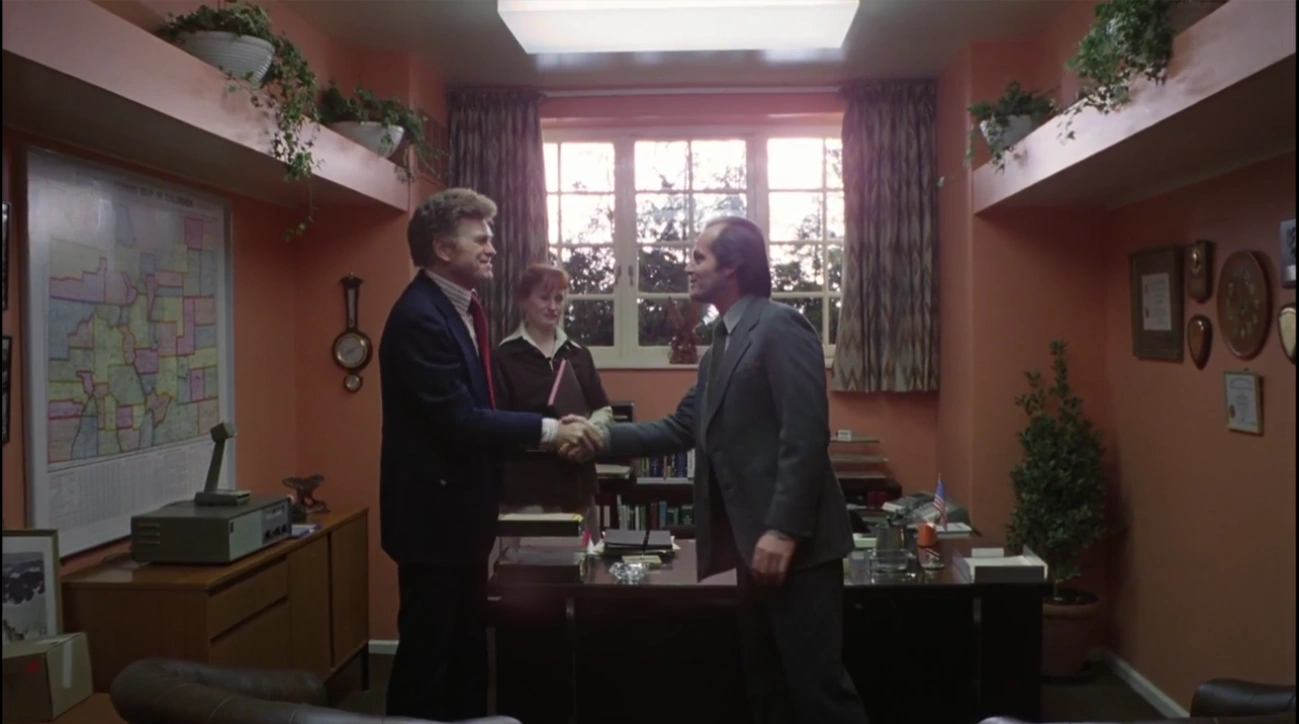
Grey tweed suit- reflects the sofas shown No.7 (and the black and white photo shown No.5)
Green plaid shirt, will come to reflect the Native American blanket (on Wendy) No.83
Saturated green tie: the weave reflects the walls of the hedge maze
Closing Day:
Jack’s jacket is a pattern called Gamekeeper tweed. Its use was for those who hunted on the grounds of large estates.
A Month Later:
Jack wears a green t-shirt with Stovington Eagles. Stovington is a reference to the original King novel, but the green color is reflected within The Games Room and Room 237.
Tuesday:
Jack wears a dark version of the color in A Month Later, reflecting both the fact that the scene takes place at night, but the darker themes of anger and violence within the Torrance marriage.
Thursday:
Jack wears a dark grey/green turtleneck during the scene where he’s shown to be transitioning from person to predator.
Monday:
Jack wears two layers of blue: one medium tone in his bathrobe and a navy color in the pajamas. He’s reflecting the blues in the West Wing Hallway.
Wednesday-4PM
Jack wears a dark blue plaid shirt, blue jeans, and a deep red corduroy jacket.
The color red is the same as the Overlook employees, including Lloyd.
The fact that it’s corduroy is also relevant, it’s known as the poor man’s velvet (the employees have velvet jackets).
When Jack and Grady are standing within the Gold Room bathroom, the vibrancy of the red is so strong that both Jack and Grady’s jackets look similar.
Jack’s the main character of The Shining. He’s the husband of Wendy, father to Danny.
His actions embody a type of man that sees himself as great but behaves as his lesser demons.
In the book, he’s much more sympathetic and well rounded— which makes sense. Stephen King experienced the hotel that created this story, and King fought the battle to become sober. It makes sense why he would portray an alcoholic father and husband more sympathetically than Kubrick.
In this image · No.3
Jack at the interview
Jack enters the hotel as a prospective employee. The character study follows the distance between this professional presentation and his treatment of his family.
Full Character: Jack
Characters: Jack
Jack is the main character of the film, husband and father, writer, teacher, and caretaker of The Overlook.
He’s an American, based on his argument with Wendy about his job prospects— blue collar (or someone who does manual labor).
Knowing this, it’s strange that Jack goes from being a glorified janitor to being “the most important person” but that shift is important.
In American Culture, it’s often viewed as more important to be a man of ideas and creativity than a husband and father. An important man is a career man, not a man who rears the new generation of men.
In Domestic Abuse, Jack views Danny as a threat. Jack views Wendy as an obstacle to overcome in dealing with the threat.
The two narratives blend together when Jack kills Halloran. Halloran, a man who’s status is not only significantly higher than Jack’s (Halloran is Head Chef, has a separate living space, access to help and community, and means to pay for a next-night flight into a weather crisis), but who also has a sincere emotional connection with Danny.
The mediocre white man’s need to take down successful Black men is a tale as old as at least the 1600’s when the wealthy land owners knew to pit the poor Irish against the slaves. (History as A Weapon, People’s History of The United States).
The presentation and interactions with Grady: how Jack has “always been the caretaker” comes immediately after the fight with Wendy about how his job prospects would be “shoveling driveways” and “working at carwashes” if he left the hotel — jobs (and signifiers) of teenagers and young boys— not grown men. This, along with how Jack behaves like Wendy’s second son, is a comment on both American Culture and Domestic Abuse.
Kubrick may have ghosts interact with Jack, but if they’re always in front of a reflective surface, are we seeing ghosts or is Jack presenting versions of himself he’d rather see? And how is this different from how abusive people behave in real life?
Styling, Clothing & Colors
The early chapters has Jack in a lot of green- whether that speaks to jealousy, inexperience, or simply a preference. By the time we get to Tuesday, Jack’s in a deeply saturated/forest green. By No.33 (Thursday), he’s in a dark grey. Monday he’s soaked in blue, and from Wednesday throughout the remainder of the film, he wears a dark saturated red corduroy jacket, a deep blue plaid shirt, and blue jeans.
Come the final shot of the film, he’s shown in a black and white photo in a tuxedo.
The Interview:
Grey tweed suit- reflects the sofas shown No.7 (and the black and white photo shown No.5)
Green plaid shirt, will come to reflect the Native American blanket (on Wendy) No.83
Saturated green tie: the weave reflects the walls of the hedge maze
Closing Day:
Jack’s jacket is a pattern called Gamekeeper tweed. Its use was for those who hunted on the grounds of large estates.
A Month Later:
Jack wears a green t-shirt with Stovington Eagles. Stovington is a reference to the original King novel, but the green color is reflected within The Games Room and Room 237.
Tuesday:
Jack wears a dark version of the color in A Month Later, reflecting both the fact that the scene takes place at night, but the darker themes of anger and violence within the Torrance marriage.
Thursday:
Jack wears a dark grey/green turtleneck during the scene where he’s shown to be transitioning from person to predator.
Monday:
Jack wears two layers of blue: one medium tone in his bathrobe and a navy color in the pajamas. He’s reflecting the blues in the West Wing Hallway.
Wednesday-4PM
Jack wears a dark blue plaid shirt, blue jeans, and a deep red corduroy jacket.
The color red is the same as the Overlook employees, including Lloyd.
The fact that it’s corduroy is also relevant, it’s known as the poor man’s velvet (the employees have velvet jackets).
When Jack and Grady are standing within the Gold Room bathroom, the vibrancy of the red is so strong that both Jack and Grady’s jackets look similar.
Jack’s the main character of The Shining. He’s the husband of Wendy, father to Danny.
His actions embody a type of man that sees himself as great but behaves as his lesser demons.
In the book, he’s much more sympathetic and well rounded— which makes sense. Stephen King experienced the hotel that created this story, and King fought the battle to become sober. It makes sense why he would portray an alcoholic father and husband more sympathetically than Kubrick.